
WHY OZEMPIC AND MOUNJARO MIGHT BE MESSING WITH YOUR HAIR


PUBLISHED ON:
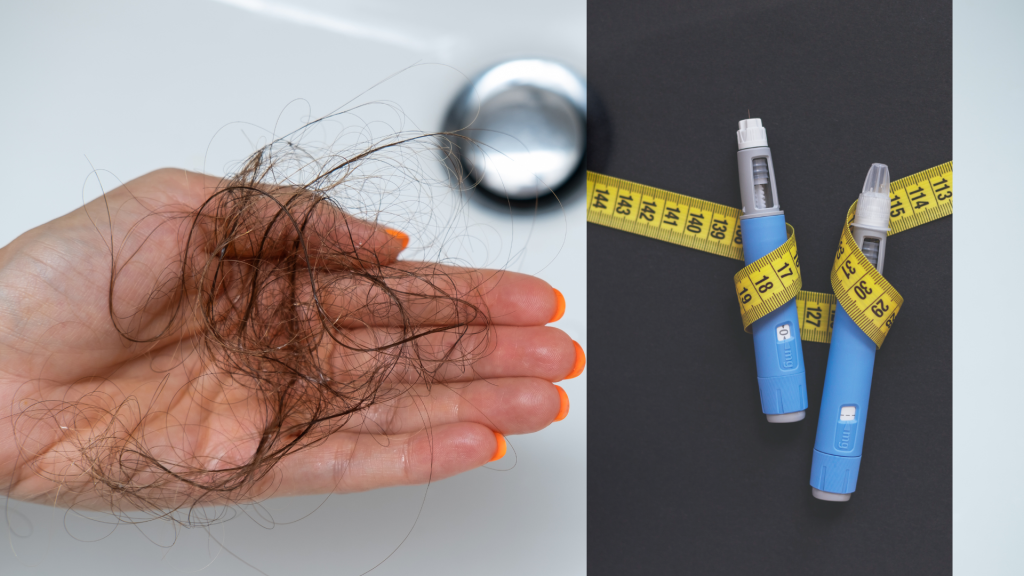
What’s The Deal With Hair Loss After Weight Loss?
You’re finally seeing results with weight loss—whether it’s from Ozempic, Mounjaro, or even a surgical procedure—and you’re feeling amazing. But then you start noticing more hair on your brush, in the shower, or on your pillow… pretty much everywhere except your head. Not ideal, right?
Here’s What’s Happening.
While these medications aren’t directly causing hair loss, rapid weight loss can lead to a condition called telogen effluvium. It might sound sci-fi, but it’s simply stress-induced hair shedding. So, if you’ve been on a fast track to weight loss, your hair might be struggling to keep up.
Weight Loss Highs, Hair Loss Lows!
You’re thrilled—you’ve hit your weight loss goals! Clothes fit better, confidence is high, and then… your hair starts thinning. Nothing like rocking your dream outfit while constantly checking mirrors, worried about thinning spots. But don’t stress; there are ways to handle this, and I’m here to walk you through them.
What Exactly is Telogen Effluvium?
Let’s break it down. Telogen Effluvium is temporary hair loss that occurs when your body goes, “Wait, what just happened?”
Triggers: Rapid weight loss, stress, or any major disruption to your body’s system can cause hair follicles to pause their growth phase. The result? More shedding than usual. But don’t panic—this condition is usually temporary, and with some care, your hair can bounce back.
How to Care for Your Hair When It’s Feeling Fragile
Your hair might be feeling a bit sensitive right now, which is totally normal. Here’s how to help it recover:
- Ditch Drastic Color Changes Bold new colors are fun, but right now, your hair might not handle it well. Bleaching and heavy highlights can be too harsh for fragile hair.
- Ease Up on Heat Tools Daily heat styling can be damaging, so limit use. If you can’t give up your curling iron, try turning down the heat and always use a quality heat protectant.
- Invest in Professional Conditioning Products You deserve more than a basic conditioner! Opt for salon-grade products that nourish your hair and scalp.
- Prioritize Scalp Health Think of your scalp as the foundation for healthy hair. If it’s dry or flaky, your hair won’t thrive.
Gentle scalp scrubs and soothing serums can make a world of difference.
Extensions to the Rescue: Your Hair’s Best-Kept Secret
While your hair takes its time to recover, Our hair extensions can offer the volume and fullness you’ve been missing.
- Add Length and Color without damaging your natural hair.
- Skip the Bleach: Want to go blonde? Extensions can give you the look without the harshness.
- Longer Styles, Less Heat: Extensions hold styles longer, meaning less daily styling stress for you.
They’re like the multitasking friend you didn’t know you needed—adding volume, protecting your natural hair, and letting you skip the hot tools. And with our pro maintenance routine, your scalp will stay healthy, giving your hair the best chance to grow back stronger.
Give Your Hair a Fighting Chance: Book a Consultation
Ready to stop worrying about thinning hair? Let’s make a plan to restore your confidence. Book a free consultation to explore how extensions can help you regain your hair’s fullness. Tap here, and let’s work some hair magic.
Can Ozempic or Mounjaro Cause Grey Hair?
One question we're hearing more and more at the salon: "Does Ozempic cause grey hair?" While there's no direct clinical evidence that GLP-1 medications like Ozempic or Mounjaro cause premature greying, rapid weight loss absolutely stresses your body — and that stress can affect melanocyte function, the cells responsible for producing hair pigment.
Here's what may be happening: when your body goes through significant metabolic changes, it redirects resources away from non-essential functions like hair pigmentation. Combined with potential nutritional deficiencies common during rapid weight loss — particularly vitamin B12, iron, copper, and zinc — your hair follicles may produce less melanin, leading to premature grey strands.
What You Can Do About It
- Get bloodwork done. Ask your doctor to check B12, iron, ferritin, copper, and zinc levels. Deficiencies in these nutrients are directly linked to premature greying.
- Prioritize protein intake. GLP-1 medications reduce appetite, which often means less protein. Hair needs amino acids to maintain color and strength.
- Consider a professional color service. If grey is showing up faster than expected, our luxury color services can blend and cover while your body adjusts. We specialize in natural-looking grey coverage that grows out beautifully.
- Be patient. Stress-related changes to hair color can sometimes reverse once your weight stabilizes and nutrition improves.
Whether you're dealing with thinning, shedding, or unexpected grey from your weight loss journey, we can help. Book a consultation and we'll create a plan that works with your hair — not against it.
Frequently Asked Questions
Does Ozempic cause hair loss?
Ozempic itself doesn't directly cause hair loss. However, the rapid weight loss it triggers can cause a temporary condition called telogen effluvium — a stress-induced shedding that typically resolves within 6-12 months once your weight stabilizes.
Does Ozempic cause grey hair?
There's no direct clinical link between Ozempic and grey hair. However, rapid weight loss can stress your body and create nutritional deficiencies (B12, iron, copper, zinc) that may affect melanin production and accelerate greying.
Can Mounjaro cause hair loss or grey hair?
Like Ozempic, Mounjaro (tirzepatide) can trigger telogen effluvium through rapid weight loss. The same nutritional stresses that cause shedding can also affect hair pigmentation. Maintaining adequate protein and micronutrient intake is key.
Will my hair grow back after Ozempic hair loss?
Yes, in most cases. Telogen effluvium is temporary. Once your weight stabilizes and your body adjusts, normal hair growth typically resumes within 6-12 months. Hair extensions can bridge the gap while you wait.
What helps with hair loss from weight loss medications?
Focus on protein-rich nutrition, supplement any deficiencies (B12, iron, biotin, zinc), avoid harsh chemical treatments, reduce heat styling, and consider professional hair extensions as a temporary solution while your hair recovers.